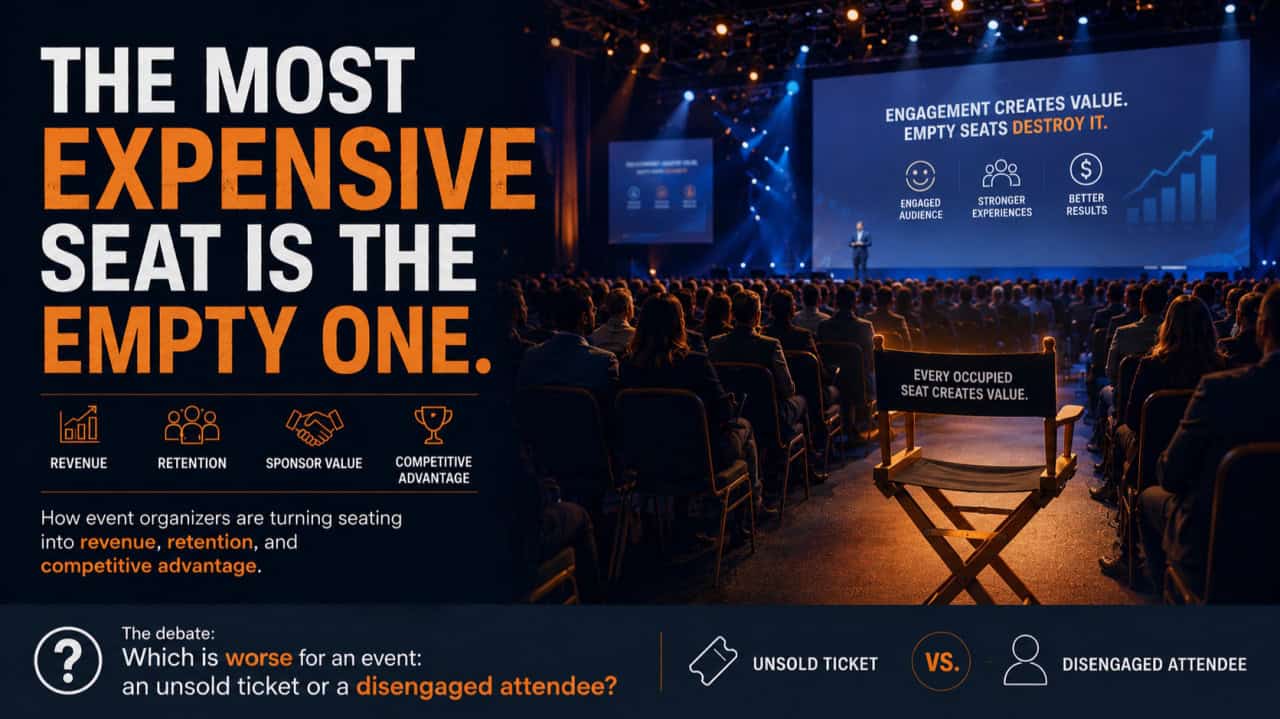
There’s a quiet assumption baked into almost every live event – You need chairs, so you rent them. You transport them. You stack them. You deploy them. And when the event is over, you clear them out as quickly as possible. It’s a line item. A cost. Something operational teams deal with while everyone else focuses on the “real” parts of the experience.
It’s so common that no one really questions it anymore. Seating is a logistical problem.
But that assumption is wrong, or at the very least, incomplete, because when you take a step back and actually look at how people experience events, something very different starts to emerge.
Think about the last event you attended, not from an organizer’s perspective, but from your own.
You arrived, maybe after a bit of a journey. You queued. You found your way in. You looked around, got your bearings, maybe grabbed a drink. And at some point, whether it was 10 minutes in or an hour later, you looked for somewhere to sit, not because it was a luxury, because it was a need.
That moment when someone decides they want to sit down is one of the most predictable behaviors at any live event. It doesn’t matter if it’s a concert, a festival, a sporting event, or a community gathering. At some point, people want to pause. Reset. Take in what’s happening without being on their feet. And yet, despite how universal that need is, seating is rarely treated as part of the experience design, it’s treated as an afterthought.
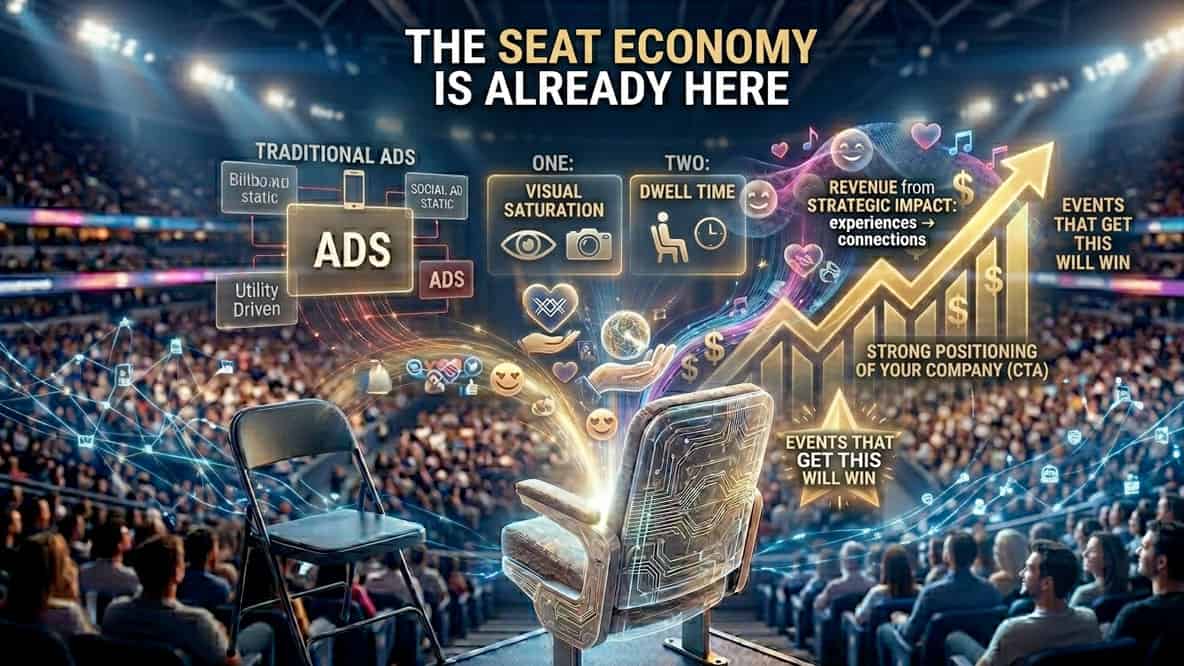
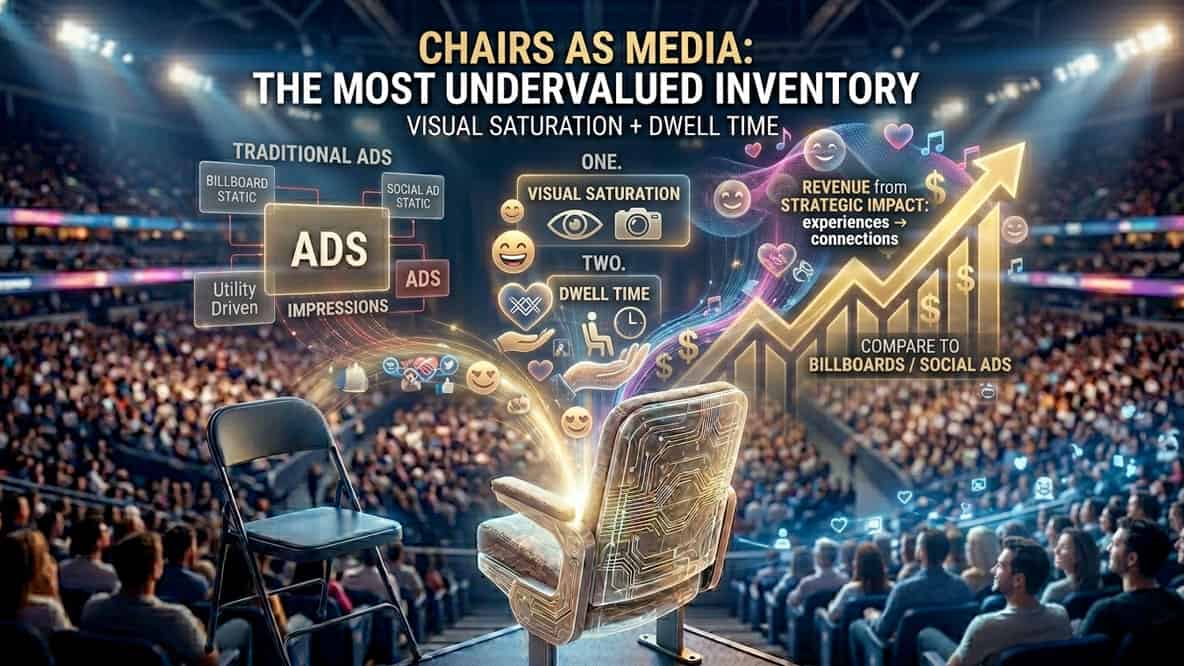
What’s interesting is that seating isn’t just another touchpoint, it’s one of the longest-duration interactions a person has at an event. People might glance at a banner for a few seconds. They might walk past a sponsor booth. They might notice a screen in their peripheral vision.
But when someone sits down, they stay there.
Sometimes for minutes. Sometimes for hours – It’s not passive exposure. It’s proximity. It’s presence. It’s time. And in a world where attention is increasingly fragmented and expensive, time is the one thing brands can’t easily buy.
Now layer on something even more important. Unlike most branded touchpoints at events, seating isn’t interruptive. It doesn’t ask for attention – It doesn’t compete for it – It earns it by being useful.
That’s a fundamentally different dynamic.
Because the relationship between a person and a chair is not transactional in the way advertising is. It’s practical. Almost invisible. You don’t think about the chair, you just use it.
But that’s exactly what makes it powerful.
When something is both useful and present, it bypasses the resistance people have developed toward traditional marketing. There’s no banner blindness. No ad fatigue. No instinct to ignore.
There’s just experience.
This is where the shift starts to happen. When you stop looking at chairs as equipment and start looking at them as infrastructure for experience, because once you do that, a different set of questions emerges.
Instead of asking:
“How many chairs do we need?”
You start asking:
“How are people interacting with seating throughout the event?”
“Where do they sit, and for how long?”
“What happens around those moments?”
“Who is present in those moments with them?”
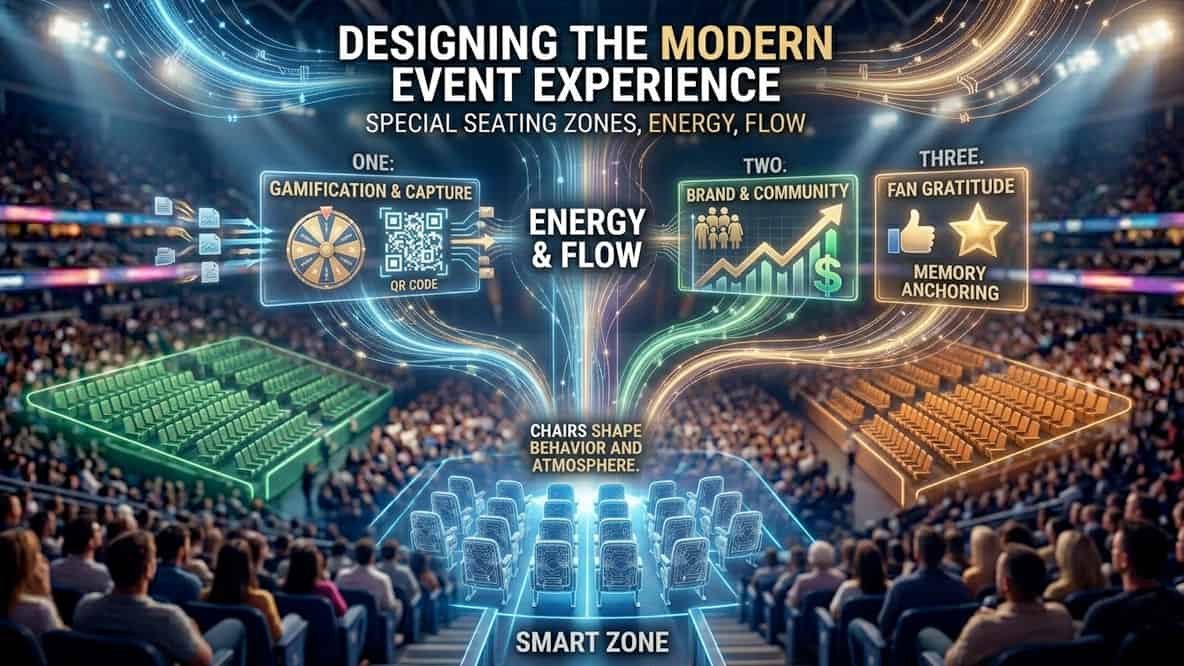
And when you follow that line of thinking, something becomes very clear. Seating is not just a functional layer – It’s a behavioral layer and it shapes how people move, where they gather, how long they stay in certain areas, and how they experience the event as a whole.
It influences energy, flow, and even safety and yet, in most events today, that layer is completely underutilized.
Let’s break this down from three different perspectives.
– From a fan’s point of view, seating is about ease. They don’t want to carry a chair across a field or through a venue. They don’t want to think about whether they’ll be able to find a place to sit later. They don’t want friction before the event has even started. What they want is simple – To arrive, enter, and know that they can relax when they need to. It’s not a premium expectation. It’s a baseline one.
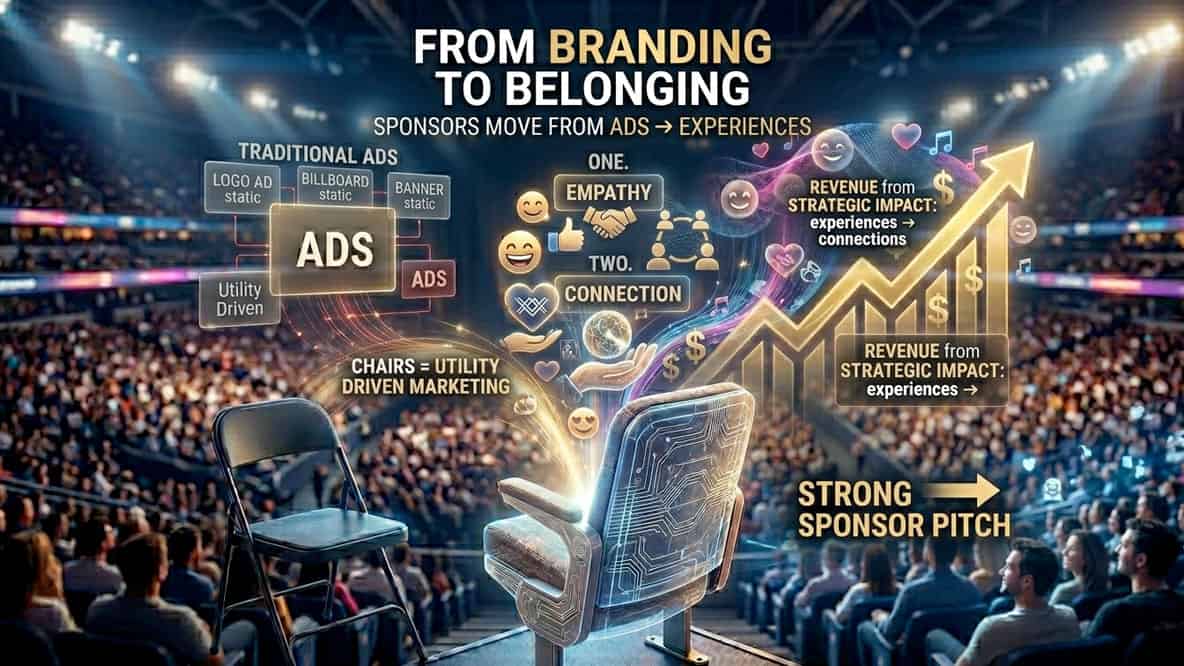
– From a sponsor’s perspective, the challenge is different. Attention is scarce. People are overwhelmed. Traditional sponsorship assets – logos, signage, booths are increasingly easy to ignore. Even when they’re seen, they’re not always felt. Sponsors are looking for ways to be part of the experience, not just adjacent to it. They want interaction. They want relevance. They want to be associated with something positive, not just visible in the background. But most of the tools available to them haven’t evolved much.
– From an organizer’s perspective, the priorities are operational.
How do you move people through the venue efficiently? How do you reduce bottlenecks? How do you maintain safety without creating friction? How do you improve the overall experience without dramatically increasing costs?
Seating, in its traditional form, doesn’t solve these problems – If anything, it sometimes makes them harder, especially when it’s unmanaged or brought in by attendees themselves.
So you have three groups.
1. Fans who want ease.
2. Sponsors who want meaningful engagement.
3. Organizers who want control and efficiency.
And sitting right in the middle of all three… is the same object – A chair.
The question is not whether chairs are important – It’s whether they’re being used intelligently?
Now imagine a different approach.
Instead of asking fans to bring their own chairs, seating is provided. Not randomly, but deliberately. Placed in advance. Designed as part of the layout. Integrated into how the event flows.
Now imagine those chairs are not neutral. They carry branding, but not in a loud, intrusive way. In a way that aligns with their function. They’re associated with the experience of sitting, resting, enjoying.
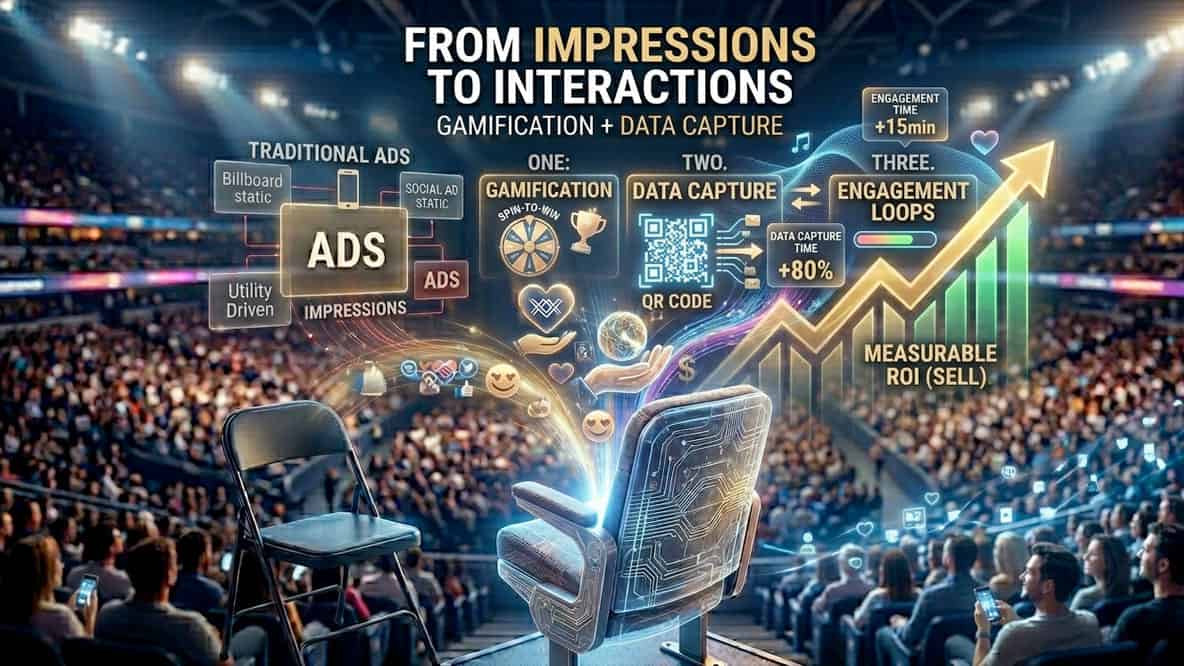
And then imagine that interaction doesn’t stop there. What if that seat could be a starting point?
For a simple activation. A moment of engagement. A way for a fan to opt in, participate, or connect with a brand on their own terms, suddenly, that chair is doing much more than providing somewhere to sit.
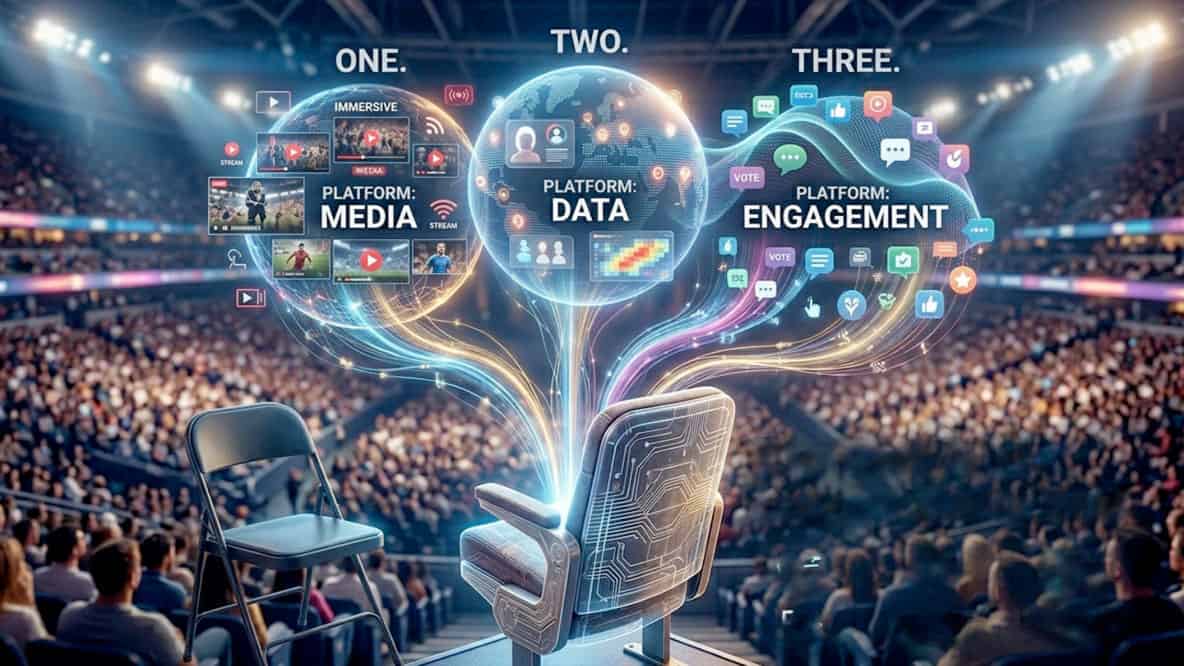
It’s acting as a node – A point of connection between the fan, the sponsor, and the event itself. Scale that across an entire venue, hundreds, sometimes thousands of seats, each one used. Each one interacted with. Each one part of someone’s experience. What you start to see is not a collection of chairs, but a distributed layer of media and engagement.
This is what we mean when we talk about “chairs as a platform.”
Not in a technical sense, but in a practical one. A platform is something that enables other things to happen. It creates structure. It supports interaction. It scales across an environment. And when seating is approached in the right way, it does exactly that.
It becomes:
A fan amenity that improves the experience in a tangible way. A sponsor asset that generates attention, goodwill, and interaction. An operational tool that helps organizers manage flow, safety, and space more effectively.
What’s interesting is that none of this requires changing what a chair is, it just requires changing how we think about it.
For decades, seating has been treated as a background element, necessary, but not strategic, that’s starting to change, because the pressure on live events is increasing.
Fans expect more – Sponsors demand better ROI – Organizers are balancing tighter margins with higher expectations.
And in that environment, the most valuable opportunities are often hiding in plain sight.
The seat is one of them, not because it’s new, but because it’s been overlooked!
At conCHAIRto, LLC. this is exactly the shift we’ve been focused on. Moving away from seeing chairs as something you simply rent, and toward seeing them as something that can be designed, sponsored, and activated in a way that benefits everyone involved.
Fans get a better experience – Sponsors get meaningful engagement – Organizers get a more efficient and commercially viable model.
It’s a simple idea on the surface.
But once you start to unpack it, it changes how you think about the entire event, because the most powerful assets in a venue aren’t always the biggest or the loudest. Sometimes, they’re the ones people spend the most time with. And sometimes… they’re the ones people sit on!