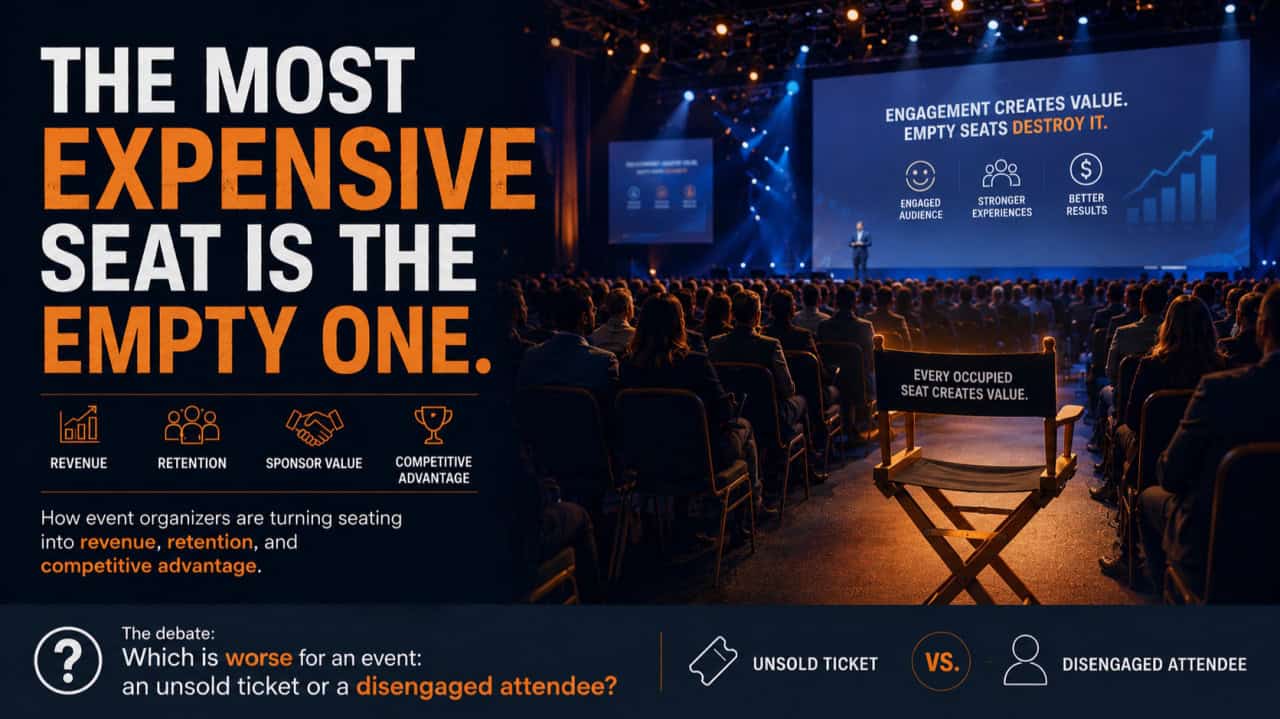
How event organizers are turning seating into revenue, retention, and competitive advantage.
When event organizers evaluate the success of an event, the conversation almost always begins with ticket sales. How many tickets were sold? Did the event reach its attendance target? Was revenue higher than the previous year?
These are important measures, but they only tell part of the story. A ticket sale is essentially a prediction. It suggests that someone intends to attend, but it does not guarantee they will show up, stay engaged, or contribute to the experience that organizers and sponsors are trying to create.
Every event professional is familiar with the gap between tickets sold and actual attendance. Some people never arrive. Others leave after the keynote or halftime break. Some remain physically present but become disengaged long before the event ends. Yet despite how common these behaviors are, they are often viewed as operational issues rather than strategic ones.
The reality is that attendance quality may be just as important as attendance volume.
An empty seat represents far more than a missing attendee. It represents lost engagement, reduced atmosphere, diminished sponsor exposure, and a weaker experience for everyone else in the room. While organizers have traditionally focused on filling seats, the bigger challenge increasingly lies in keeping those seats occupied.
That distinction matters because live events are ultimately experience-driven businesses. Sponsors do not invest because a certain number of tickets were sold. They invest because they want access to an audience that is engaged, attentive, and emotionally connected to the event. Likewise, attendees do not return because an event sold out. They return because they enjoyed being there.
This is why the most expensive seat at any event is often the empty one!
Consider two hypothetical events. The first sells 5,000 tickets but experiences significant no-shows, early departures, and declining audience engagement throughout the day. The second sells slightly fewer tickets, yet attendees remain engaged from start to finish, participate actively, and leave with a positive impression of the experience.
Most sponsors would choose the second event without hesitation.
The reason is simple. Occupied seats create value. They create energy in the room, increase opportunities for sponsor interaction, strengthen crowd participation, and improve the overall perception of the event. Empty seats do the opposite.
Anyone who has entered a packed venue understands the impact immediately. There is a sense of momentum and anticipation that comes from being surrounded by an engaged audience. The experience feels important because other people have chosen to be part of it. Conversely, visible gaps in attendance can alter perceptions regardless of how many tickets were sold. Empty sections affect atmosphere, influence attendee behavior, and can reduce the sense of excitement that event organizers work so hard to create.
What makes this particularly interesting is that the industry still tends to measure success through acquisition metrics. Ticket sales, registrations, and attendance forecasts dominate planning discussions. Yet in many industries, retention has become a more valuable growth lever than acquisition. The same principle is beginning to emerge in live events.
Selling a ticket gets someone through the door. Keeping them engaged is what creates long-term value.
This shift changes the questions organizers should be asking. Rather than focusing exclusively on how many people attended, they can begin examining how attendees behaved once they arrived. How long did they stay? Which areas maintained strong occupancy throughout the event? When did audience engagement begin to decline? What aspects of the experience encouraged people to remain present and involved?
These questions reveal something that ticket sales alone cannot. They reveal the true value of an occupied seat.
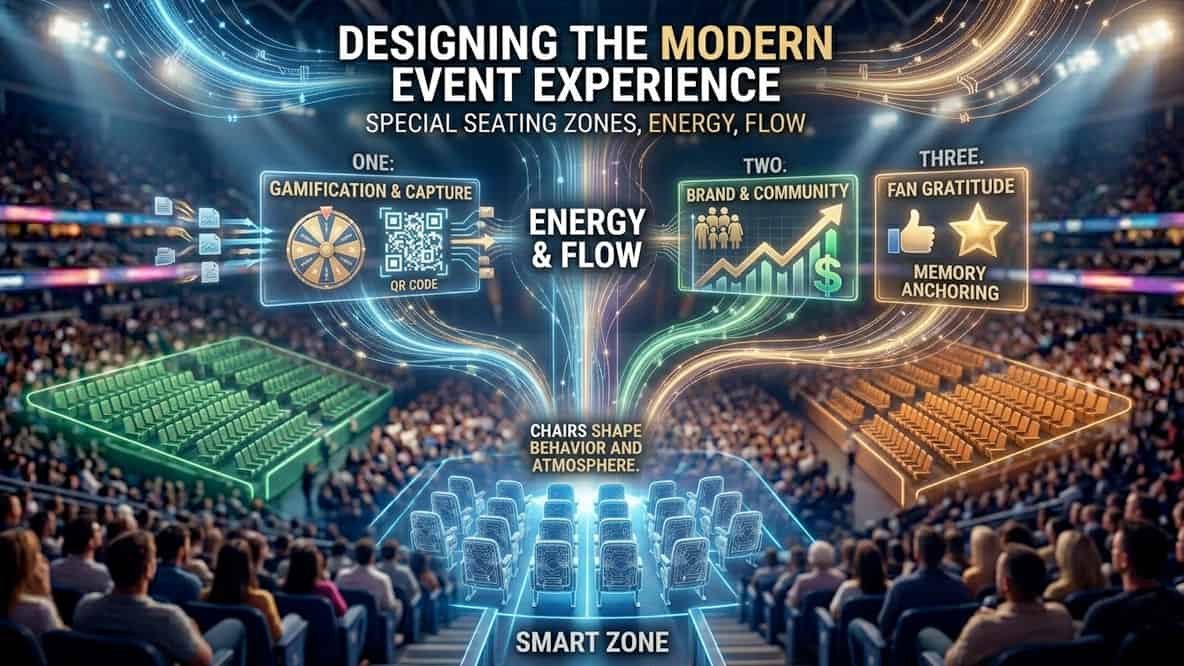
This is also where the conversation comes back to chairs.
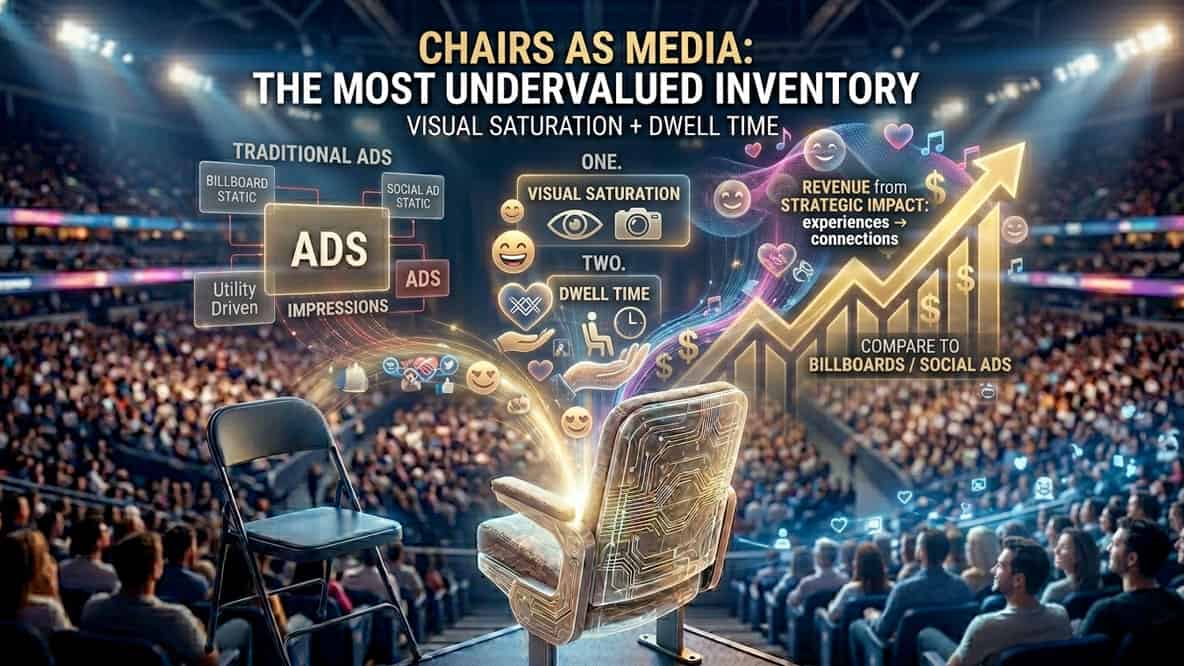
For decades, seating has been viewed primarily as infrastructure. It was something that needed to be ordered, arranged, and managed, but rarely considered a strategic asset. However, as organizers place greater emphasis on engagement and retention, seating starts to look very different.
A chair is one of the few touchpoints that every attendee experiences. It influences comfort, visibility, dwell time, and overall satisfaction. It is where attendees consume content, interact with sponsors, watch performances, and spend much of their event experience. In many ways, it becomes the platform upon which engagement occurs.
Viewed through that lens, seating is no longer simply a logistical requirement. It becomes part of the event growth strategy.
The organizers who understand this shift are beginning to think less about filling seats and more about maximizing the value of every occupied seat. Because every attendee who remains engaged contributes to sponsor performance, strengthens the atmosphere, enhances the attendee experience, and increases the likelihood of future attendance.
In an increasingly competitive event landscape, that may prove to be one of the most important distinctions of all.
So perhaps the question is no longer, “How many tickets did we sell?”
Perhaps the better question is, “How much value did every occupied seat create?”
And that leads to the debate I would love to hear your thoughts on:
Which is worse for an event: an unsold ticket or a disengaged attendee?
JOIN THE CONVERSATION
This series explores how one of the most overlooked assets in live events is evolving into a driver of sponsorship value, audience engagement, attendee retention, and long-term event growth. If these ideas challenge your thinking or reflect experiences you’ve seen firsthand, I’d love to hear your perspective.
Leave a comment, share your experience, or challenge the argument. The most valuable conversations happen when event professionals, sponsors, venues, and brands bring different viewpoints to the table.